When a Sewer Line Has Reached the End of Its Life
Sewer line installation comes up in three main situations: new construction, full replacement of a failed line, and switching from a septic system to city sewer. For most Arvada homeowners, it’s the middle one.
Many homes in Arvada were built before 1970 and still run vitrified clay pipe. Clay pipe has a limited service life, and older Arvada neighborhoods with mature trees pay the price. Roots find the joints first, then widen until sections of the pipe are more root than pipe. At that point, snaking and patching don’t fix the problem — the pipe itself is done.
Arvada Pro Plumbing holds a state plumbing license, backflow prevention certification, and gas fitting certification. We pull all required Jefferson County permits before a trench opens or a bore head turns.
Signs You Need Installation, Not Just a Repair
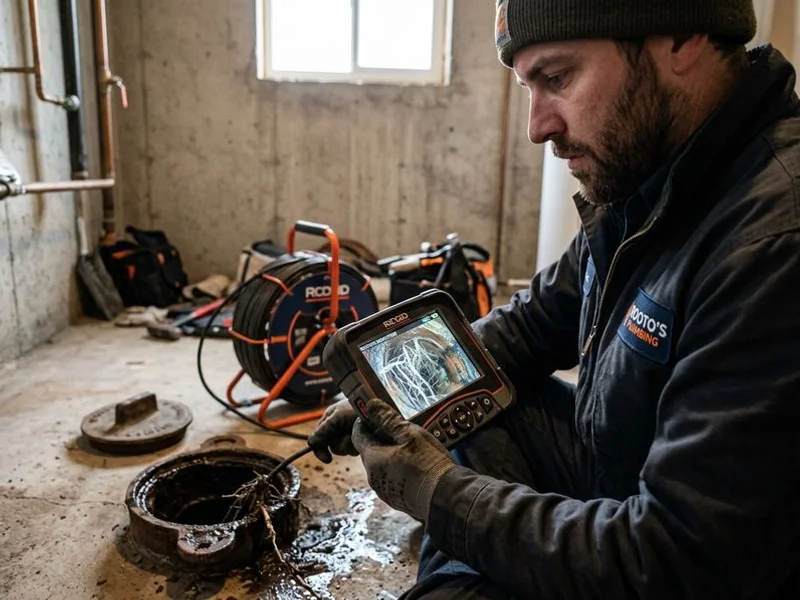
Most homeowners have already had the line snaked once or twice before anyone mentions the pipe itself is compromised. That’s the pattern. One thing we see constantly on Arvada calls is a homeowner who’s been through two snaking visits in twelve months — and the camera shows a clay line with root channels running most of its length. Spot repair won’t hold.
Here are the signals that point to a full installation:
- Multiple backups per year: Repeated snaking without lasting improvement means the pipe is failing, not just clogged
- Root channels through most of the run: Roots spread across a long section indicate structural failure, not an isolated spot
- Offset or separated joints: Freeze-thaw cycles, soil movement, and old age shift pipe sections out of alignment
- Collapsed sections: Soft spots in the yard or flattened pipe on camera footage mean the line is structurally gone
- Pipe material past its service life: Vitrified clay over 60 years old and Orangeburg pipe (used in homes built through the early 1970s) have both outlived their useful life in most cases
What we use, and why
New sewer lines in Arvada go in as SDR-35 PVC or Schedule 40 PVC — both rated for soil burial and approved under Colorado’s adopted plumbing code. For pipe bursting installs, we pull HDPE pipe, which handles the bursting process without damage.
Here’s how the two main installation methods compare:
| Feature | Trenchless (Pipe Bursting / HDD) | Open-Cut (Traditional) |
|---|---|---|
| Best Used For | Intact route, good endpoint access, established landscaping or concrete over the line | Collapsed sections, major re-routes, severe offset joints |
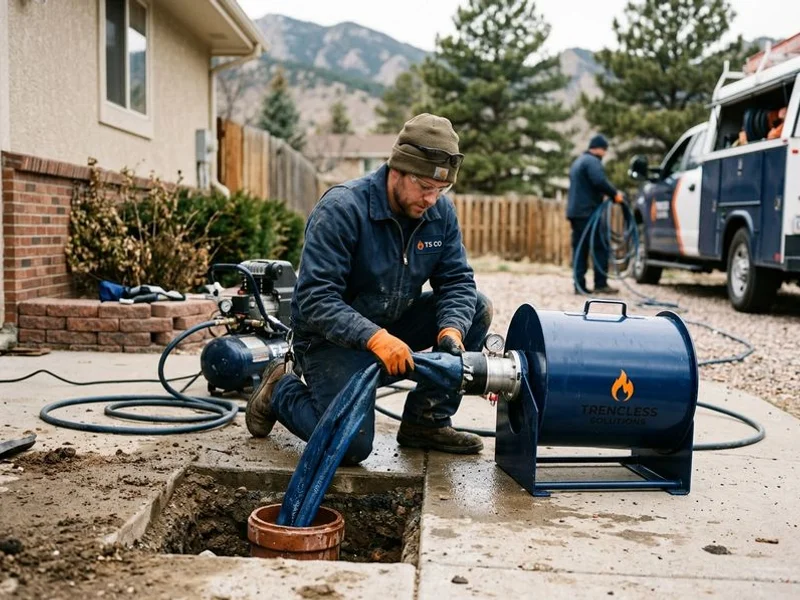
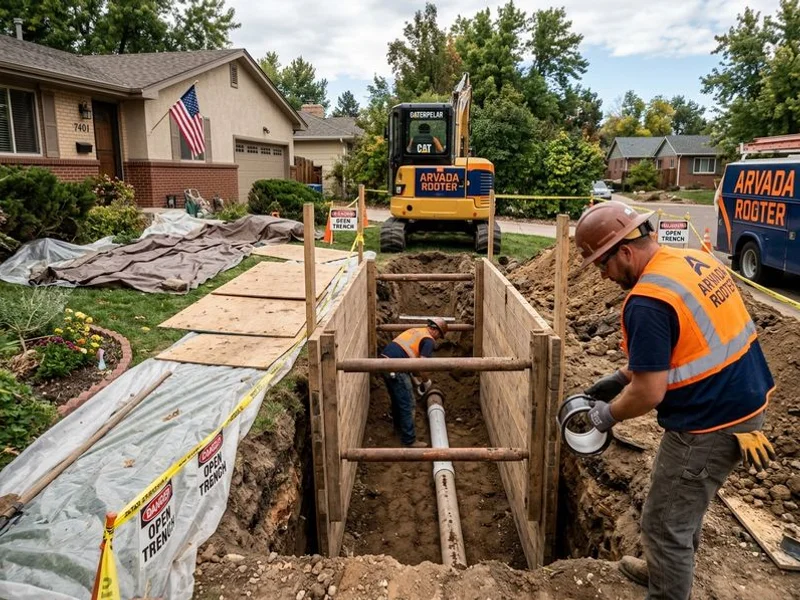
| How It Works | Bursting head fractures old pipe while pulling new pipe in place; HDD bores under obstacles | Excavate a trench the full length of the run, set pipe on bedded gravel, connect to main |
| Yard Disruption | Minimal — two small access pits at each end | Full-length trench along the pipe route |
| Long-Term Result | New continuous pipe, no joints along the run | New pipe with proven method for complex layouts and reroutes |
When the line has collapsed sections or needs significant rerouting, open-cut is the right call. Trenchless costs more upfront but saves on concrete and landscaping restoration. For Arvada properties with a driveway or patio over the sewer route, that difference adds up fast.
Proper sewer installation prevents the lateral failures that lead to sanitary sewer overflows. The EPA tracks sanitary sewer overflows as a leading source of wastewater contamination — most start with aging or improperly installed laterals. [1]
What our Sewer Line Installation service includes
- Camera inspection to map the existing line and document condition before any quote
- Permit pulled from Jefferson County or City of Arvada before work starts
- Gravel bedding graded to correct slope for the pipe diameter
- SDR-35 PVC or HDPE pipe with watertight connections at the main tap
- City inspector sign-off before backfill on open-cut work
- Backfill compacted in lifts to prevent settlement in Arvada's clay soil
Get a Free Quote
Call us now for fast, upfront pricing. No hidden fees.
(720) 807-6616 Or request service online →