What Sewer Line Replacement in Arvada Actually Includes
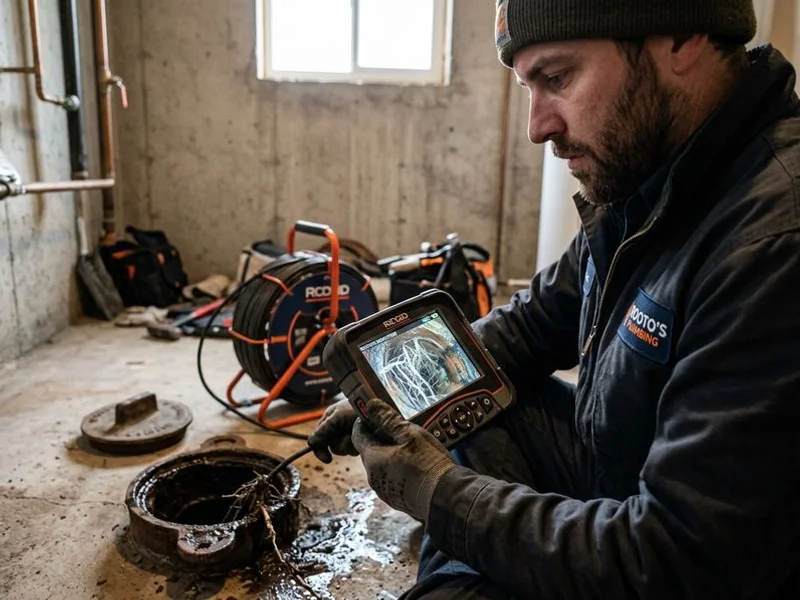
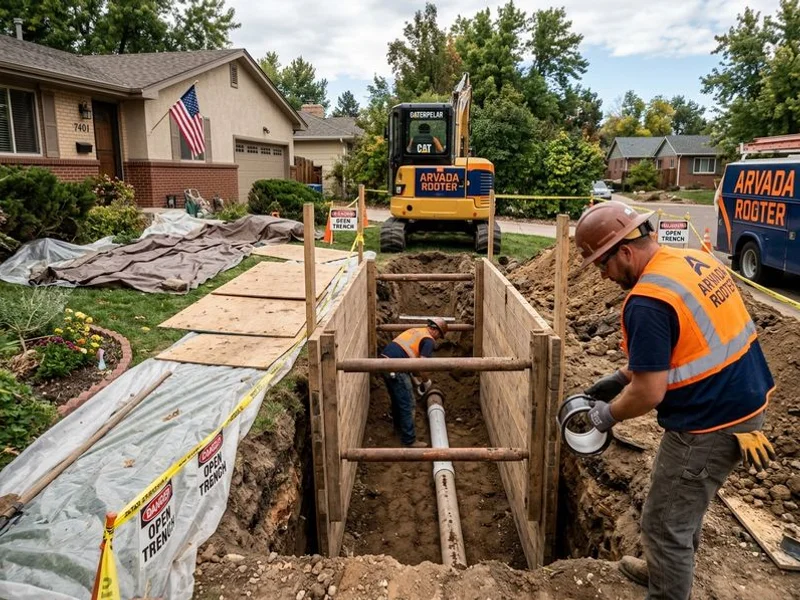
Sewer line replacement in Arvada means removing a failed or deteriorated lateral and installing new pipe from the house foundation to the city tap connection. All replacement work requires a Jefferson County permit and a passed open-trench inspection before backfill — no exceptions. Every job starts with a camera inspection to locate belly sections, collapses, or root damage that won’t show from the surface.
Replacement includes:
- Camera inspection to document pipe condition and locate problem areas
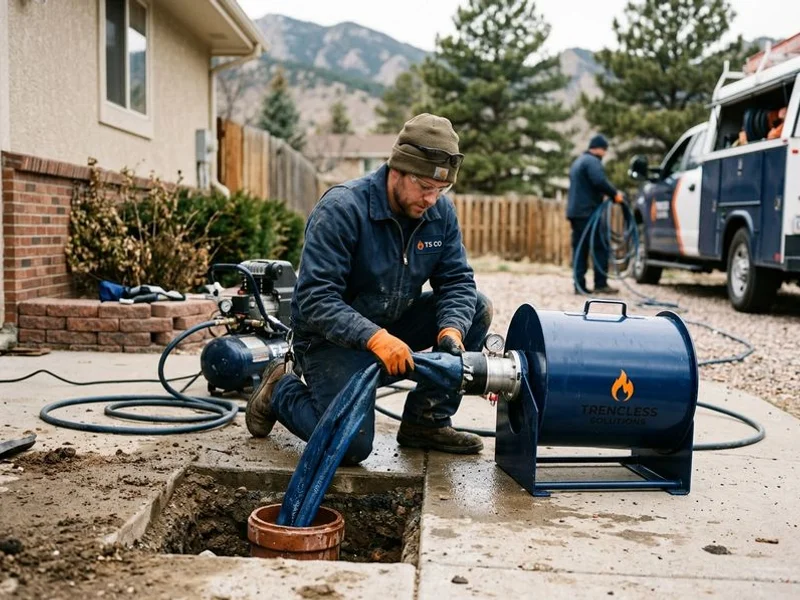
- Open excavation, pipe removal, and new pipe installation at minimum 1/4 inch per foot slope
- Jefferson County inspection before backfill, plus surface restoration
Signs Your Arvada Sewer Line Needs Replacement — Not Just a Cleaning
Slow drains throughout the house, gurgling toilets, and sewage odors indoors point to a line problem — not a clog. Those are signs worth acting on fast.
Replacement is the right call when the line is structurally failed: collapsed, badly bellied, or deteriorated past what jetting can clear. Arvada homeowners in older neighborhoods near Ralston Road and Old Towne know this pattern well — repeated snaking that buys a few weeks before the backup returns. That’s not a clog. That’s a failing pipe.
Catching failure early avoids sewage backing up into the home and keeps your yard from saturating from below. Arvada’s bentonite clay shifts with seasonal moisture, creating belly sections that hold standing waste. Jetting clears the clog, but the belly stays and refills.
Pre-camera quoting is a hard rule on our Arvada jobs. On lots west of Ralston Road, the sewer main at the cleanout often sits 2–4 inches higher or lower than original installation grade because the clay has moved. You won’t know what you’re replacing until you look.
How Arvada’s Clay Soil Damages Sewer Lines Over Time
Arvada sits on the same Front Range bentonite clay belt that runs from Thornton through Lakewood. This soil can swell up to 20% or more by volume when wet and contracts hard when it dries out.
Homeowners across Arvada — including neighborhoods like Lake Arbor and Countryside — face lateral damage from ground movement that has nothing to do with pipe age or installation quality. Seasonal clay movement cracks ABS and PVC joints, creates belly sections mid-run, and shears sewer stubs clean off at the foundation wall. This pattern is especially common on older lots west of Ralston Road.
And that’s why sewer problems in Arvada come back even after a cleaning. The ground itself is pushing and pulling the pipe.
One thing we see constantly on Arvada calls: frost heave damage at the cleanout. Arvada’s frost line sits at 36 inches, but 1970s–1990s tract builds in Lake Arbor and Countryside often set cleanouts at 18–24 inches. Decades of landscaping and grade changes have pushed some of those cleanouts right into the frost zone. Wye fitting cracks at the cleanout are more common here than most crews expect.
Old Pipe Materials Found in Arvada Homes Built Before 1970
Homes built in Old Towne Arvada and the Grandview neighborhood before 1965 are running Orangeburg pipe or vitrified clay tile — not PVC or cast iron. These aren’t just old materials. They’re past their service life.
Orangeburg was used heavily in Arvada’s post-WWII build-out. It has a 50-year service life under ideal conditions. Front Range clay is not ideal conditions. Deformed, collapsed, and fully deteriorated Orangeburg is standard on these jobs, not the exception.
Identifying the pipe material before scheduling work determines whether spot repair is even possible. On these runs, it usually isn’t.
Vitrified clay in 1940s–1950s homes along Ralston Creek has root intrusion that goes beyond what snaking or jetting can fix. When we pull permits through Jefferson County for these jobs, budget for full replacement from house to tap. Spot repair isn’t viable when the whole lateral is compromised.
How the Jefferson County Permit and Inspection Process Works
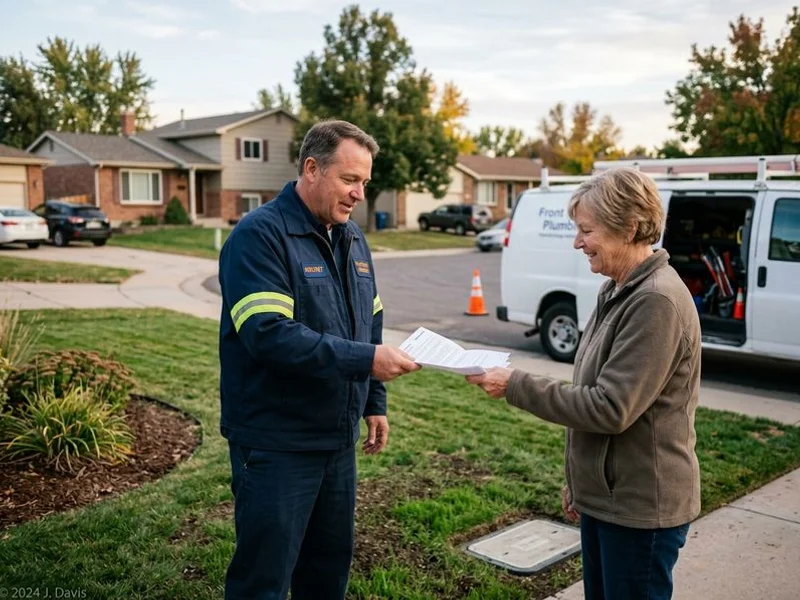
All sewer line replacements in Arvada require a permit pulled through Jefferson County before work begins. No exceptions — regardless of scope or pipe length.
The county requires an open-trench inspection before backfill. The inspector checks slope and the tap connection. For properties inside the incorporated Arvada city limits near creek drainages, Arvada city permits and CDPHE compliance on dewatering may both apply. Build both into your timeline before any excavation starts.
Working through the county process correctly protects you and keeps the job from stalling after the trench is open.
JeffCo inspection slots back up hard from spring through fall. Schedule the inspection request at permit pull — not after the trench is open. A trench sitting open waiting for an inspection slot costs money and creates a safety hazard on occupied lots.
What to Expect During and After Sewer Line Replacement
A standard Arvada sewer line replacement runs one to three days depending on lateral length, pipe depth, and soil conditions. Plan for your water service to be shut off during active work.
Homes built between 1985 and 2000 in east Arvada tracts near 64th and Kipling often have polybutylene supply lines inside the structure. Opening walls or crawlspaces to access the lower sewer stub-out on these jobs sometimes reveals PB supply feeding fixtures above. That’s a scope conversation that needs to happen before demo, not during.
Arvada Water supply pressure can run high at the meter — Denver metro systems commonly exceed 80 PSI in parts of the service area. We always check PRV condition before closing out a sewer replacement job. High inlet pressure accelerates joint wear where PVC transitions from existing clay tile remnants. A failed or missing PRV is a liability left behind on you.
What our Sewer Line Replacement service includes
- Camera inspection to document pipe condition
- Open excavation and full pipe removal
- New pipe installed at proper slope to city tap
- Jefferson County permit pulled before work begins
- Open-trench inspection before backfill
- Surface restoration after backfill
Get a Free Quote
Call us now for fast, upfront pricing. No hidden fees.
(720) 807-6616 Or request service online →